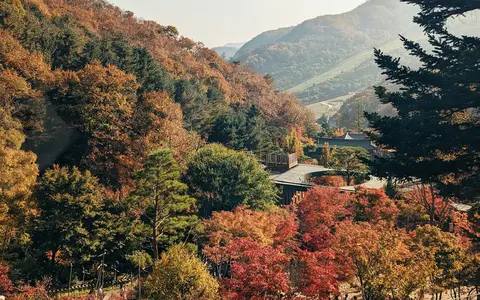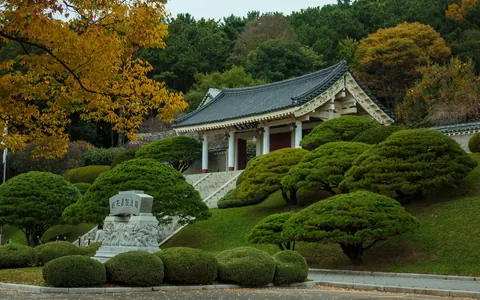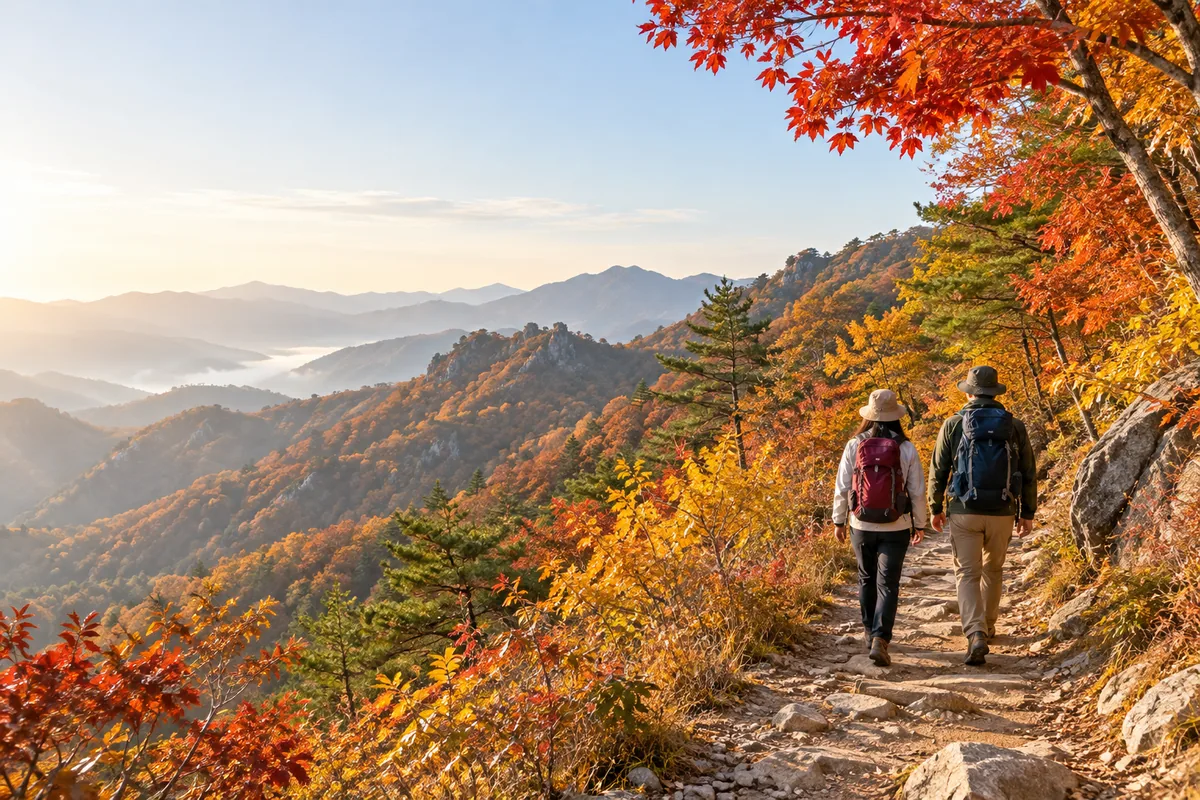
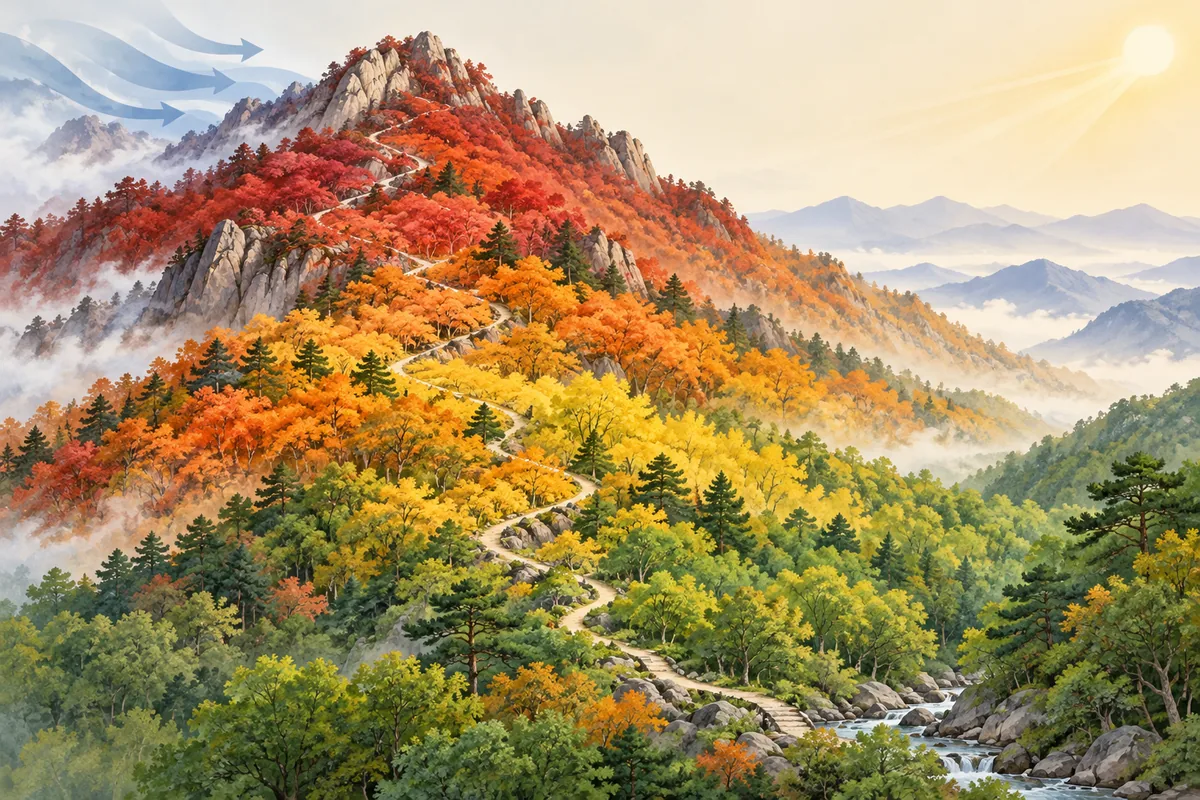
When fall foliage reports arrive in Korea, the first question is usually the peak date. Seoraksan recorded its first foliage on September 28 this year, and recent reports citing the Korea Forest Service forecast a peak around October 20. That date sounds like a promise that the entire mountain will be red, but ridgelines and valleys move through autumn on different schedules.
For a weekend hike, it is more useful to ask what the section you plan to walk looks like now. Elevation, slope direction and recent temperatures can produce different colors on the same mountain. Rain or strong wind may also bring leaves down sooner than expected. Treat a peak forecast as a clue for choosing a destination, not a reservation for perfect scenery.
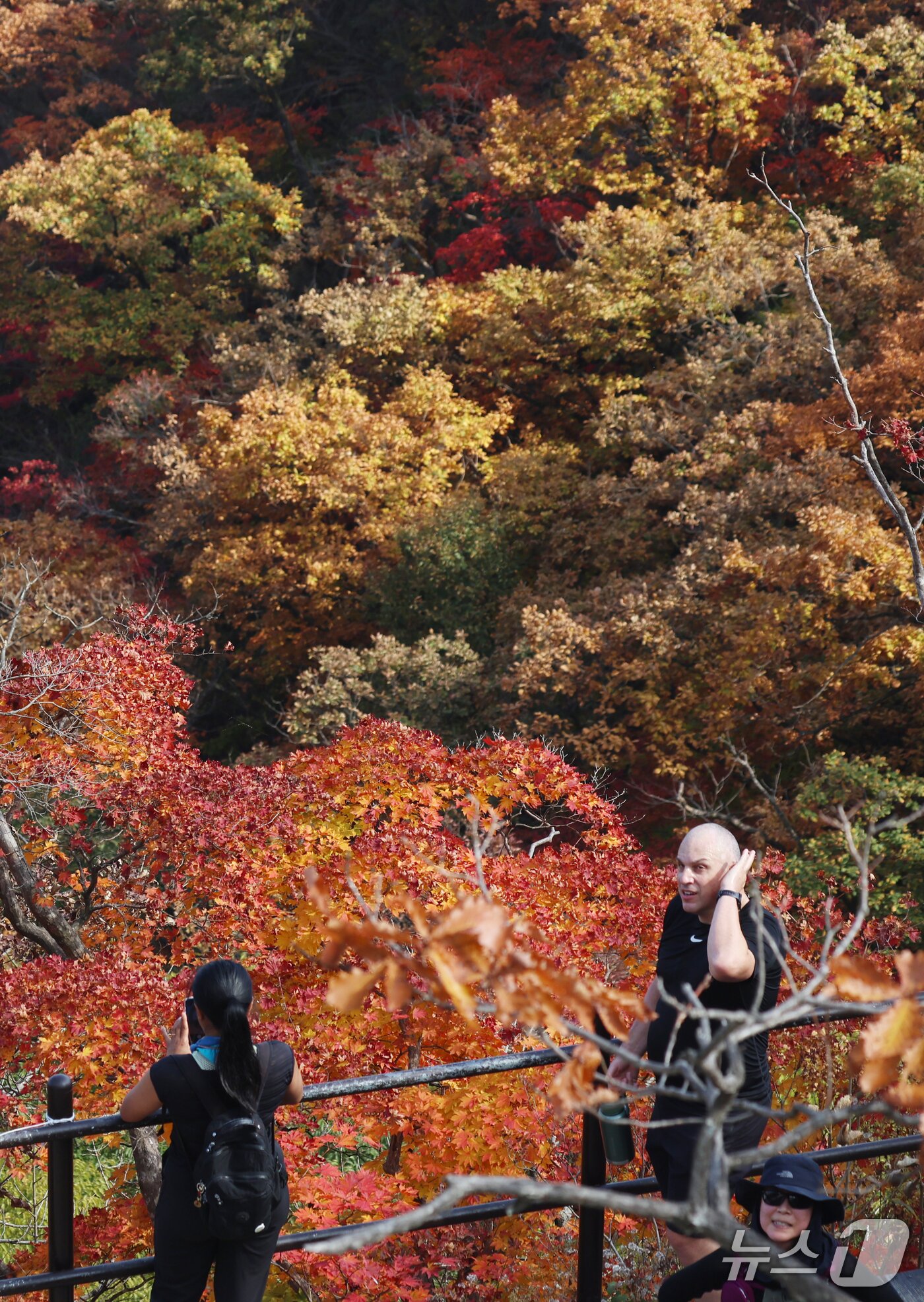 News1 Korea
A peak date does not mean the entire mountain changes at once
A forecast table is useful only when you understand its standard. The Korea Forest Service's maple forecast refers to the point when at least half of the leaves on observed trees have changed color. That may differ from weather observations based on the broader mountain landscape. When two forecasts show different dates, check what each one measures before deciding that one is wrong.
Check the park's field updates the day before you leave. Individual Korea National Park Service pages may post high-elevation safety notices, parking congestion and same-day foliage photographs. Open the Korea National Park Service visitor page, select your destination, and review the latest notices and control status instead of relying only on an older travel post.
Use the forecast to choose a mountain, then use the previous day's field information to decide whether to go.
Write down your turnaround time before the trail name
Trip reports naturally lead with summit views, but the descent controls the real schedule. Time spent taking photographs, waits for buses during foliage season, parking congestion and slower steps on wet leaves all add up. On a long out-and-back route, decide when to turn around as carefully as when to start.
Some sections, including Heullimgol, use reservation systems, and entry hours may change during peak season. The Korea National Park reservation system brings together controlled entry information, crowd levels and safety guidance. That makes it worth checking even if you have hiked the mountain before.
A daytime city temperature is not enough for choosing clothes
A pleasant day in the city can feel much colder on a windy ridge. At the same time, a single heavy coat quickly becomes uncomfortable on an uphill climb. A moisture-managing base layer, a warm midlayer and a wind or light-rain shell are easier to adjust during climbs and rest stops.
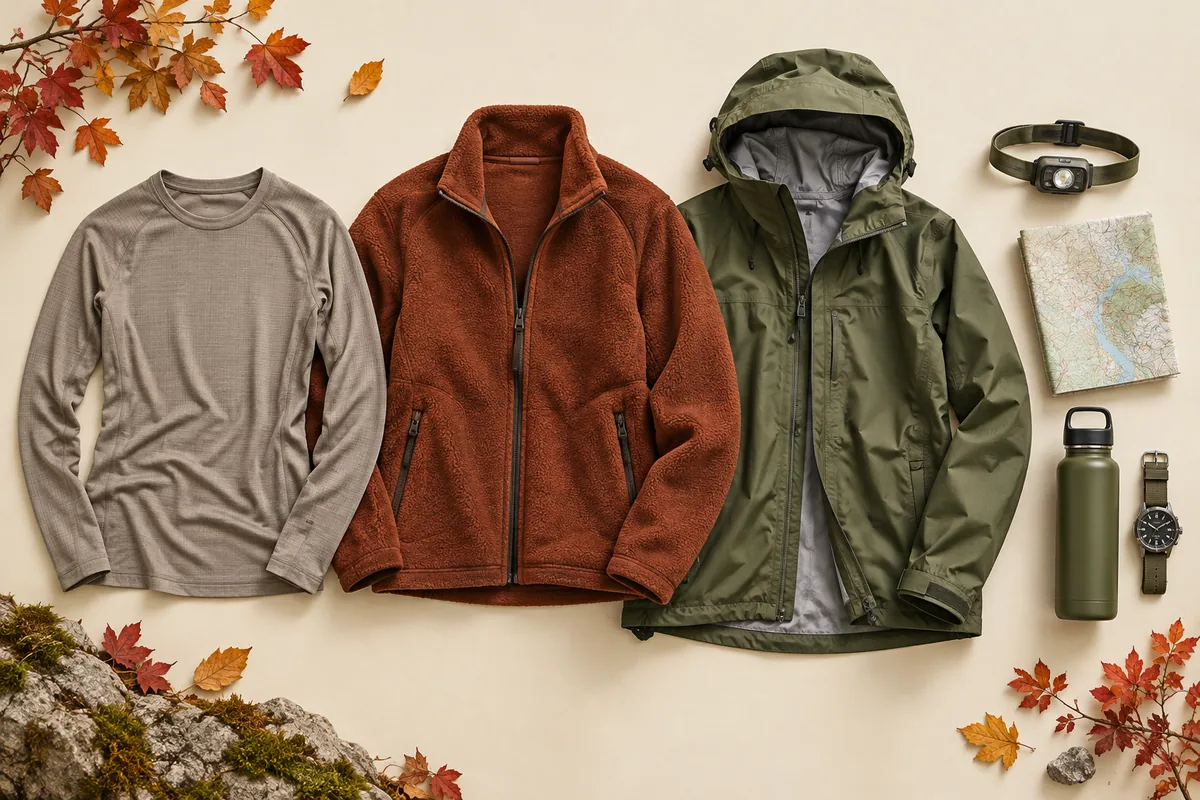
There is no need to replace equipment that already works. Try combining your own lightweight top, fleece and wind shell, and make sure they fit in your pack. The item below is only one example of a midlayer. It is sold as a men's model, so check fit, weight and current stock; use a similar garment you already own if it serves the same purpose.
The same foliage trip requires different preparation on different routes
A short valley walk and a ridgeline hike do not call for the same kit. Families on a gentle path may need to focus on restrooms, parking waits and slippery leaves. A longer mountain route expands the checklist to warm layers, water, food, a power bank and a headlamp.
The most regrettable choice in foliage season is rarely missing one predicted peak day. It is committing to a demanding route during the busiest hours or descending after dark. Choose this weekend's mountain with current field photographs, trail controls and your own walking pace in mind. A walk with slightly less color, enough time and a daylight return is likely to remain the better memory.
Sources reviewed
The article was checked against the sources below. Image context and credits appear in each caption.