Some days feel cool at the door but leave sweat running down your back ten minutes later. The same 15°C can feel much colder in wind or rain, while sunshine or intervals can warm you quickly. A transitional-season outfit chosen from temperature alone often misses the mark. This guide uses wind, rain, light, workout intensity and surface—in that order—to choose running clothes and shoes.
| Condition | What to inspect | Caution |
|---|---|---|
| Wind or light rain | Light shell, zipper and vents | Water resistance is not the same as waterproofing |
| Around sunset | Lit route, light and reflective details | Reflective material does not guarantee safety |
| Workout intensity | Quick-drying base and removable outer layer | Higher intensity can make you warm sooner |
| Wet leaves or dirt | Outsole wear and surface-specific shoes | Do not overestimate a road shoe's grip |
Check four things beyond temperature before you leave
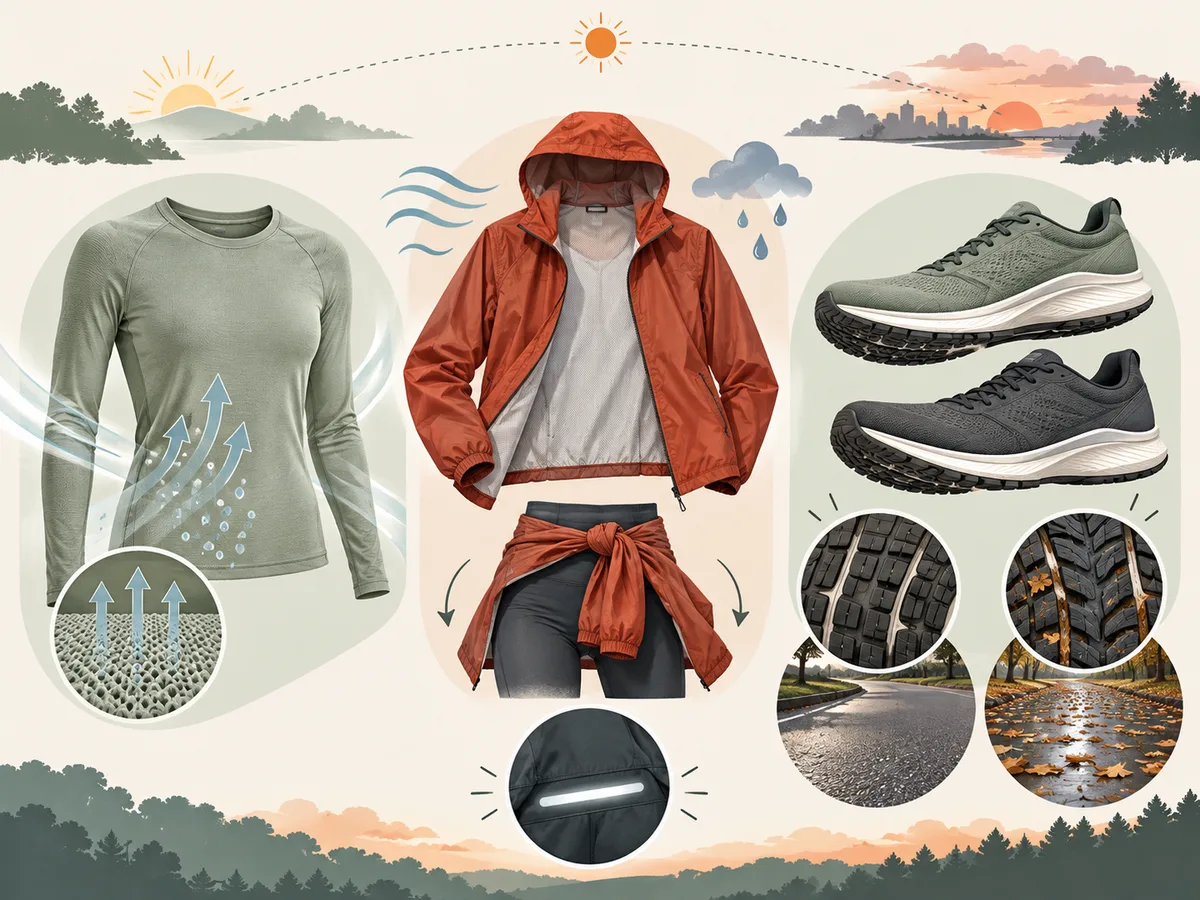
After checking temperature, look at wind speed, the chance of rain and sunset time. Decide whether the session will be long and easy or short and hard. Then inspect the route: paved road, dirt or stretches covered in wet leaves. These conditions change the useful top weight, the need for a shell, visibility details and the outsole you should choose.
Check moisture management and friction in the first layer
A synthetic or merino first layer that moves moisture and dries quickly is practical. Cotton can hold sweat and feel cold once wind reaches the damp fabric. Do not stop at the fiber label: check whether seams press under the arms or chest and whether the hem rides up after 20 to 30 minutes. REI's running clothing guide likewise separates moisture wicking, quick drying, low-friction seams and ventilation as useful features.
Check whether the outer layer opens or comes off when you heat up
The point of transitional layering is not to wear the most insulation; it is to adjust while moving. A light wind shell can soften the start, but it should also unzip or tie around the waist when you heat up. Water resistance for a brief shower and sustained waterproofing are not the same. Do not assume a protection level the maker does not claim.
 On South Korea
On describes the men's Weather Jacket as an ultralight running jacket with breathability and wind protection. It is one example of a shell for a breezy, cool day, but the close fit and the displayed price of KRW 279,000 on October 17, 2026 also matter. If you already own a light windbreaker, test its zipper, ventilation and storage before buying another. Both product links in this article are included without an affiliate relationship.
For bottoms and socks, check friction and storage as well as coverage
Long versus short is not the only decision. Check whether your knees move freely, the waistband stays put and a phone or keys bounce in the pocket. Thin tights under shorts add warmth but are difficult to remove mid-run. If your feet sweat heavily, choose a quick-drying sock over cotton and make sure no fabric folds under the toes or heel.
Choose shoes for today's surface, not the season's name
For a short run on dry pavement, a familiar daily trainer may be all you need. Around wet leaves, dirt or pooled water, inspect the outsole grooves first and slow down. A rubber outsole on a road shoe cannot be treated as a guarantee against slipping. If mud or technical trail continues for much of the route, consider footwear designed for that surface.
On's official men's Cloudrunner 3 page lists an 8 mm drop, a 311 g weight per shoe, high stability and a rubber outsole. It is a comparison candidate for easy daily mileage on dry paved roads when stable ride is a priority. It is not a fast racing shoe or a muddy-trail shoe, and width and underfoot feel still need an in-person fit check.
If darkness may catch you, choose a lit route first
Reflective details can return vehicle light and improve conspicuity, but they do not guarantee safety. Plan to return before dark, use a lit pedestrian route and make direct checks at crossings. If you carry a headlamp, angle it away from the eyes of people ahead.
Use the first ten minutes as a short test loop
With a new clothing combination, begin with a short loop near home. Check whether you need to open the zipper, roll the sleeves or retie the laces before heading farther away. It is better not to debut unfamiliar shoes or a new jacket on a long run or race day.
A cool-weather running outfit is not a matter of owning more gear. The layer against skin should manage sweat, the outer layer should adjust immediately, and the shoe should suit today's surface and your foot. Check the four conditions before leaving and make one adjustment in the first ten minutes; clothes you already own will cover most transitional-season runs.
Sources reviewed
The article was checked against the sources below. Image context and credits appear in each caption.