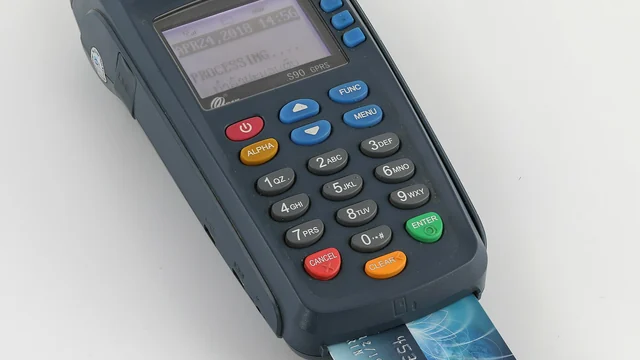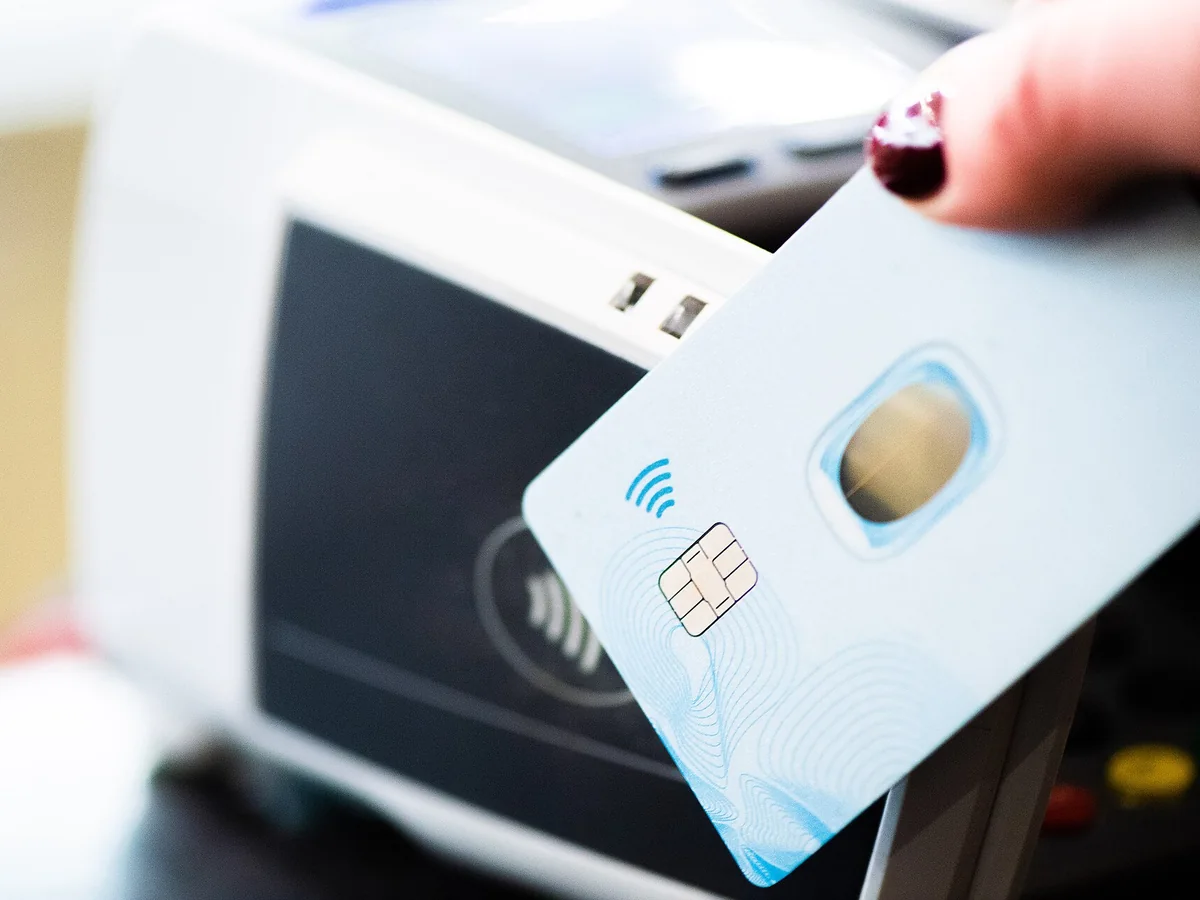
If an overseas payment is declined after you enabled a block on won-denominated transactions, disabling the block may seem like the next step. The block could be working as intended, but a decline alone does not establish the cause. First check the currency submitted for authorization.
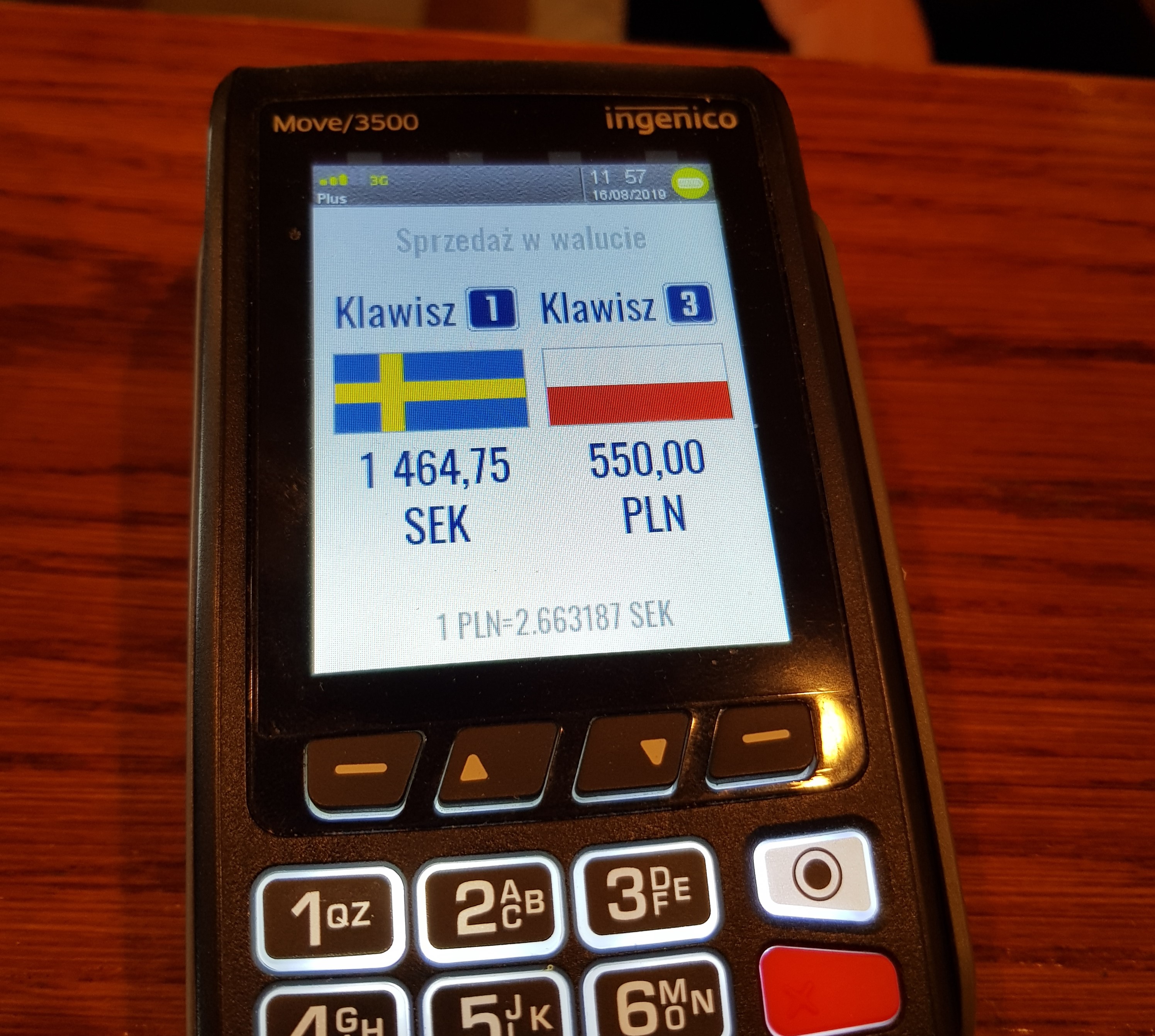
Dynamic currency conversion (DCC) lets an overseas merchant or other provider present a transaction in the cardholder’s home currency. BC Card’s notice explains that this can add a separate cost. Based on public information checked on October 21, 2026, this guide covers what to examine before disabling a block.

The currency behind a declined payment
BC Card’s blocking service rejects overseas won transactions after registration; foreign-currency transactions are not its target. If you use several cards, check whether the particular card is registered. Other issuers may have different registration rules and coverage.
 Konsumenternas
If authorization was requested in won, ask whether the merchant can process payment in local currency. Before trying again, check that the earlier attempt was not already approved. If a foreign-currency request is also declined, ask the issuer for the reason instead of repeatedly changing the DCC setting.
Displayed won prices versus won authorization
A Korean-language shopping page or a price displayed in won does not, by itself, establish whether DCC is involved. Check displayed prices separately from the authorization currency. Look at the currency selection immediately before payment and the authorization record.
Visa says a DCC offer should disclose the amounts in both currencies, the exchange rate and added charges, leaving the choice to the customer. If the rate or costs are unclear, ask for an explanation before agreeing. Tell your issuer if the merchant chose for you or pressured you to accept conversion.
A payment authorized in foreign currency can still be billed in won at home. The terms for cards issued directly by BC describe that conversion process. A won amount on the final statement is therefore not sufficient evidence of DCC.
A hypothetical $100 payment
The cost avoided by blocking DCC is separate from the card’s own overseas charges. Article 27 of BC’s directly issued card terms specifies a telegraphic-transfer selling rate on the date transaction details are received, plus international-brand and overseas-service fees. BC-branded cards issued by another bank or issuer follow that issuer’s terms. A portal’s exchange rate on the purchase date is not enough to reconcile a bill.
The following calculation is hypothetical: a $100 purchase, an applicable rate of ₩1,400 per dollar, a 1% brand fee and a 0.2% overseas-service fee. Both fees are calculated separately on the converted principal. These are not current exchange rates or the fees of an actual card.
| Item | Calculation | Amount |
|---|---|---|
| Converted principal | $100 × ₩1,400 | ₩140,000 |
| Assumed brand fee | ₩140,000 × 1% | ₩1,400 |
| Assumed overseas-service fee | ₩140,000 × 0.2% | ₩280 |
| Total | ₩140,000 + ₩1,400 + ₩280 | ₩141,680 |
In this example, foreign-currency authorization still leaves ₩1,680 in fees. The calculation excludes DCC charges, cash-withdrawal costs and any card-specific waivers or reimbursements. The ₩141,680 figure therefore represents neither a real purchase estimate nor the amount saved by declining DCC.
Reconciling the receipt and final bill
Keep the receipt’s currency and amount, then compare them with the final statement. Check which rate and fees were applied to the original purchase. Keeping these items separate makes it easier to explain whether the difference concerns conversion or authorization in a currency you did not choose.
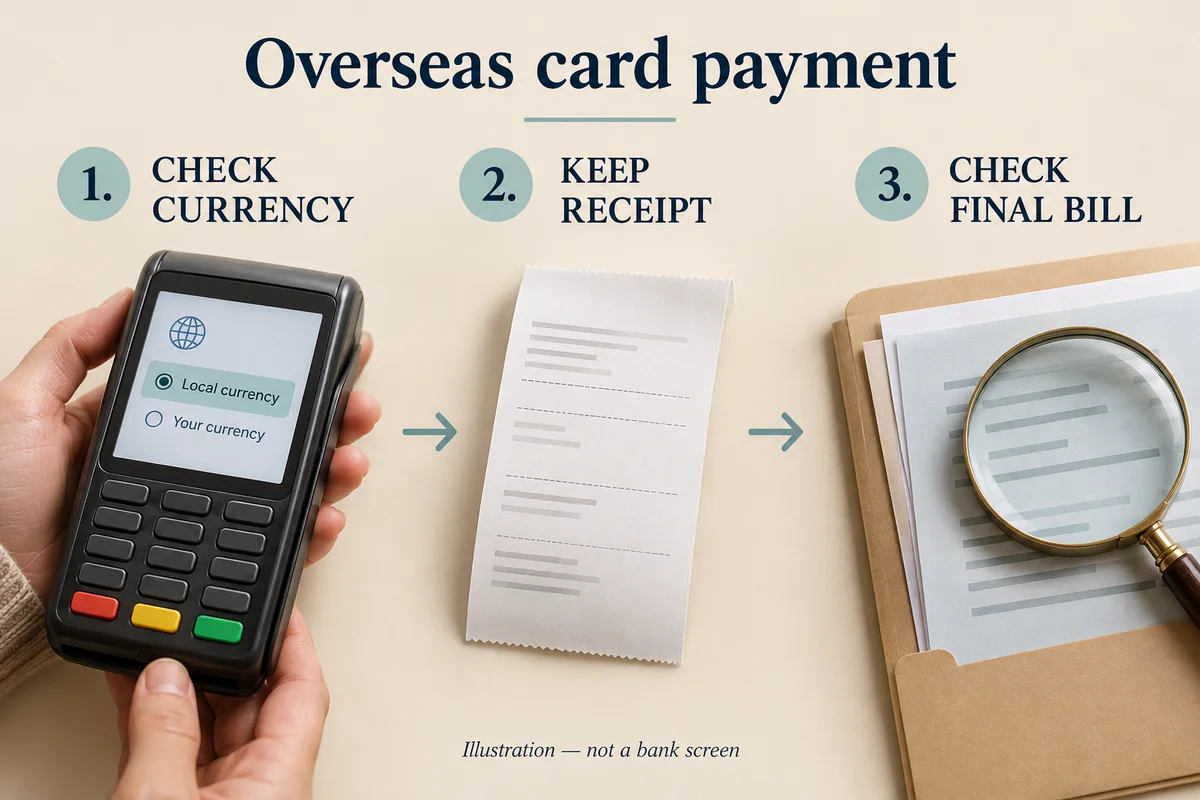
A blocking service does not replace checking the payment currency. After a decline, inspect the authorization currency; after approval, compare the receipt with the bill. If processing seems inconsistent with the stated terms, provide the records to the issuer and ask it to investigate. Cancellation or reimbursement is not guaranteed.
This is general guidance. Your card’s terms, product documentation and transaction records determine the conditions and charges that apply to you.
Sources reviewed
The article was checked against the sources below. Image context and credits appear in each caption.