
People who took to the streets in several European cities in October 2026 were not making one identical demand. Schools and public services stood out in France, housing in Spain, and living costs and wages in Portugal and Italy. Calling all of this a single European protest removes national context. What overlaps is anxiety that housing, food and energy costs are rising faster than wages and public services can respond.
Turning those scenes into a lesson that anyone can get rich by giving up coffee misses the point. Housing costs, inflation and stagnant wages are structural problems. Personal thrift cannot solve them. Money habits are not the answer to those problems; they are a buffer that can buy time during a shock. The useful starting point is not guilt but deciding the order of the money you can control.
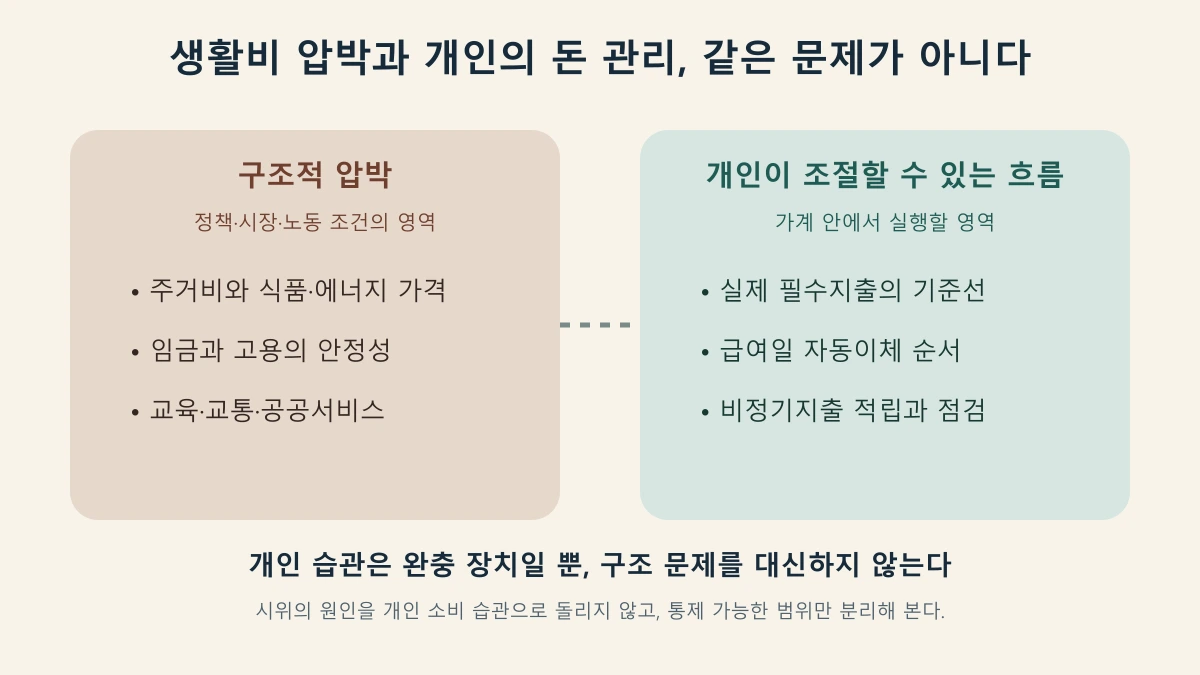
Salary allocation order before a universal percentage
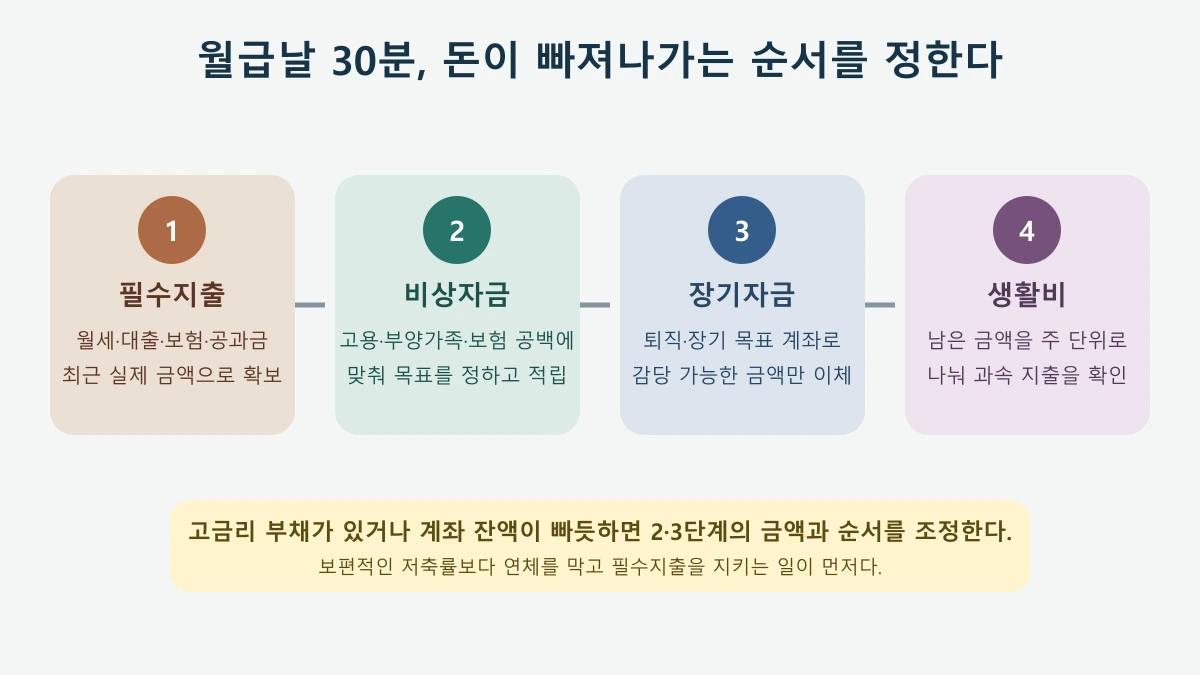
A rule telling everyone to save the same percentage is simple but not universal. Someone supporting a family, repaying high-interest debt or living on variable income cannot use the same target. Start with three months of essential spending, debt rates, job stability and dependants, then decide what is genuinely available to save.
The order may change if you are behind on payments or carry high-interest debt. After keeping a minimum emergency reserve, prioritizing principal repayment may be reasonable: investment returns are uncertain, while contracted interest keeps accruing. If priorities are unclear, Korea Inclusive Finance Agency's free financial counselling reviews income, spending and debt together.
Recurring costs beyond monthly bills
Recurring costs are not limited to visible monthly bills. Annual insurance premiums, vehicle tax, holiday spending and family-event gifts can feel unexpected only because they arrive less often. Review the previous year, divide such annual amounts by 12 and set that money aside monthly to reduce sudden jumps in card bills.
It is difficult to remember every account transfer and card payment. Korea's Account Info service lets users view automatic transfers linked to accounts in their name and, where supported, request cancellation or changes. It can reveal unused subscriptions or duplicate payments, but functions vary by institution, so check the scope shown on screen.
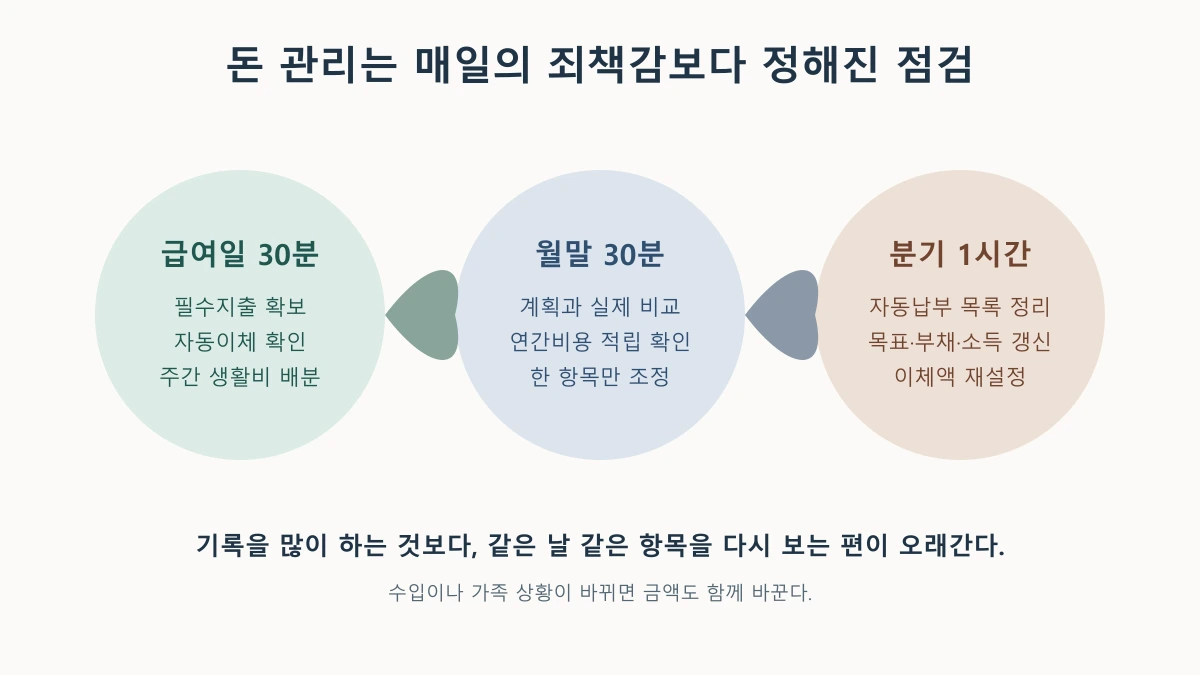
Fixed review dates instead of daily logging
A shorter set of questions is often easier to maintain than more frequent logging. On payday, check whether transfers worked. At month-end, identify the category that drifted furthest from plan. At quarter-end, ask whether insurance, telecoms, subscriptions or targets need changing. The point is to repair the system on fixed dates, not judge every purchase.
| Review time | What to inspect | What to change |
|---|---|---|
| 30 minutes on payday | Essentials and automatic transfers | Transfer order and weekly spending |
| 20 minutes at month-end | Gap between plan and actual spending | Adjust one category for next month |
| One hour each quarter | Insurance, telecoms, subscriptions and debt rates | Cancel, switch or reset targets |
Three tools for recording, automation and financial behaviour
Tools do not guarantee financial results. If writing by hand suits you, an undated planner can organize monthly income and spending. Check whether dates are preprinted, along with the cover, internal layout and seller, before purchase.
A book on automation can help readers understand recurring transfers, emergency savings and related financial behaviour more systematically. Automatic Wealth Habits was published in 2018, so compare its product and regulatory information with current official sources.
The Psychology of Money is relevant for readers examining how they respond to money and uncertainty. Owners of an earlier edition can compare its contents and added material with the 2026 commemorative edition.
Three actions for this payday
A wealth-building habit is not the art of refusing every purchase. It is deciding in advance what to protect when an outside shock hits your account. The cost-of-living pressure visible on European streets is not an individual's fault. People need both a voice demanding better wages and institutions and a small cash-flow system that preserves some immediate room to choose.
Sources reviewed
The article was checked against the sources below. Image context and credits appear in each caption.
This article contains affiliate links, and the publisher may receive a commission from qualifying purchases.